
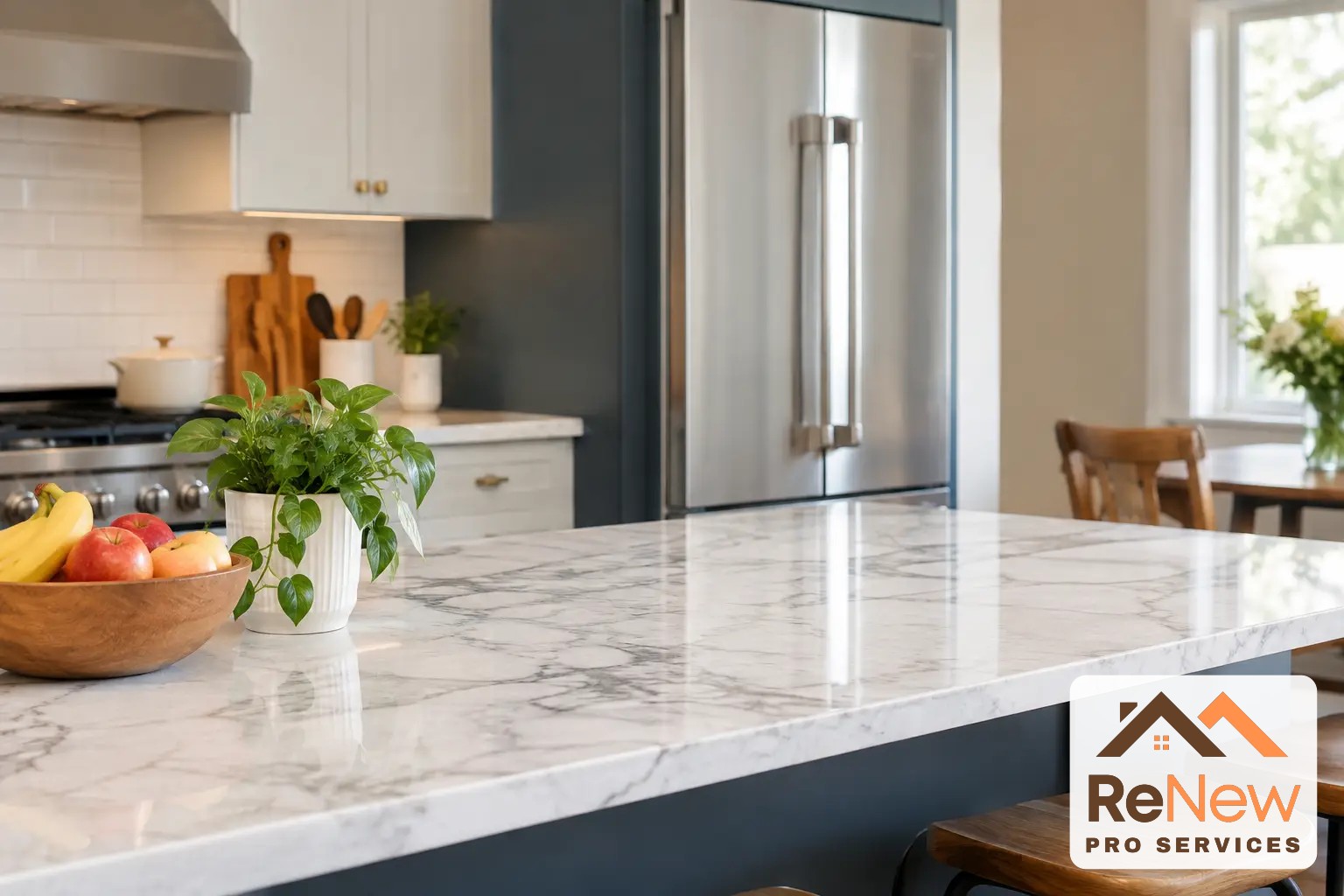
A family kitchen rarely gets a day off. It handles rushed breakfasts, homework projects, snack spills, hot pans, grocery bags, and the cleanup that follows every meal. The best countertops for busy families are not simply the ones that look good in a showroom. They need to fit how your household actually cooks, cleans, entertains, and lives.
For Massachusetts homeowners planning a kitchen remodel, countertop selection should be part of a larger conversation about layout, cabinetry, appliances, plumbing, lighting, and installation timing. A material that performs well for one household may create unnecessary maintenance for another. The goal is to choose a surface you can use confidently without treating it like a fragile finish.
What Busy Families Need From a Countertop
Durability matters, but it is only one part of the decision. A practical family countertop should resist everyday stains, tolerate frequent cleaning, and hold up to regular use without demanding special care. It should also work with your budget and the expected lifespan of the remodel.
Think honestly about the pressure points in your kitchen. Do children sit at the island for schoolwork? Does the family cook most nights? Are spills usually cleaned right away, or do they wait until after soccer practice? Do you set down hot cookware, chop directly on the counter, or use the kitchen for large gatherings? These details help determine whether a low-maintenance engineered surface, a natural stone, or a budget-conscious option makes the most sense.
No countertop material is completely indestructible. The better question is which trade-offs your family is comfortable managing. Heat resistance, scratch resistance, stain resistance, repairability, cost, and appearance do not always come together in one product.
The Best Countertops for Busy Families
Quartz: The Most Reliable All-Around Choice
Quartz is often the strongest all-around answer for active family kitchens. It is an engineered surface made with natural quartz and resin binders, creating a dense, nonporous countertop that does not require routine sealing. Juice, coffee, cooking oil, and common household messes are generally easy to wipe up, which makes quartz especially appealing for homeowners who want low-maintenance performance.
It is also available in a wide range of colors and patterns, including options that resemble marble, concrete, and natural stone. This flexibility can help a kitchen feel refined while still being practical for daily use.
Quartz does have limits. It is not the best material for direct, high heat. A hot pan placed directly on the surface can damage the resin or leave a mark, so trivets are still necessary. It can also scratch under hard use, though it performs well against normal household wear. In kitchens with intense, direct sun exposure, confirm that the selected product is appropriate for the location.
For most families, the balance of easy cleaning, stain resistance, and consistent appearance makes quartz a dependable investment.
Granite: Natural Durability With Some Maintenance
Granite remains a strong option for homeowners who want genuine natural stone and are willing to take on modest maintenance. Every slab has its own movement and color variation, giving the kitchen a one-of-a-kind appearance. Properly sealed granite is durable, heat resistant, and well suited to a hardworking kitchen.
Compared with quartz, granite generally needs more attention over time. Depending on the specific stone and sealer, it may need periodic resealing to help prevent staining. Highly porous or lighter-colored slabs can be more vulnerable to oils, wine, or acidic foods if spills sit too long.
Granite works well for families who enjoy natural materials and do not mind a simple maintenance routine. It is also a practical choice for serious cooks who value better heat resistance. During material selection, reviewing the actual slab rather than relying only on a small sample is essential. Natural variation is part of granite's appeal, but it should be an intentional choice.
Porcelain: Excellent for Heat, Stains, and Modern Design
Porcelain countertops have become increasingly popular in high-use kitchens because they are highly resistant to heat, stains, and UV exposure. Large-format porcelain slabs can create a clean, contemporary look with subtle veining, stone-inspired patterns, or more uniform finishes.
This material is particularly useful for families that cook frequently and want less concern about hot cookware. It is nonporous, so it does not need sealing, and its color can be a good fit for kitchens with substantial sunlight.
The trade-off is installation. Porcelain slabs require experienced fabrication and careful handling, particularly around edges, cutouts, and corners. Although the surface is hard, an edge can chip if it takes a sharp impact. The quality of measuring, fabricating, and installing matters as much as the slab itself. It may cost more than basic quartz or granite options, but it offers exceptional performance when installed correctly.
Solid Surface: Repairable and Family-Friendly
Solid-surface countertops offer a smooth, nonporous finish and can be fabricated with nearly invisible seams. They are comfortable to the touch, easy to clean, and available in many colors and patterns. For households that want a quiet, consistent appearance without the variation of natural stone, solid surface can be a sensible choice.
Its main advantage is repairability. Minor scratches, dull spots, and some burns can often be sanded or refinished by a professional. That can be valuable in a kitchen where the counters see years of art projects, meal preparation, and daily activity.
On the other hand, solid surface is softer than quartz, granite, or porcelain. It can scratch more easily and is not a surface for placing hot cookware without protection. It works best for families who prioritize easy care and future repair options over the hardest possible finish.
Laminate: Smart Value Without Pretending It Is Stone
Modern laminate deserves consideration, especially when a kitchen renovation needs to meet a firm budget. Available in a broad range of patterns, including convincing stone and wood looks, laminate can refresh an older kitchen at a lower material cost. It is easy to clean, comfortable for everyday use, and practical for utility areas, secondary kitchens, and rental properties.
Laminate is less resistant to heat, deep scratches, and water damage at seams or edges. A damaged section is also more difficult to repair invisibly than a solid-surface countertop. Still, it can be the right answer when the project calls for dependable function now and a future upgrade later.
A well-planned laminate installation should not be treated as a compromise in workmanship. Good edge details, properly sealed sink areas, and accurate fitting around walls and appliances make a noticeable difference in its long-term performance.
Materials That Require More Commitment
Marble is beautiful, but it is usually not the easiest choice for a busy family kitchen. It can etch when exposed to acidic foods such as lemon juice or tomato sauce, and it may stain or scratch more readily than other options. Some homeowners value the patina that develops over time. Others find it frustrating after only a few months of daily use.
Butcher block brings warmth and can work well as a designated prep area or island accent. As a full-kitchen countertop, however, it requires regular oiling, prompt cleanup, and attention to standing water. Wood can be a rewarding material, but it is best chosen by homeowners who want to maintain it rather than avoid maintenance.
Plan the Countertop With the Entire Remodel
Countertop decisions affect more than appearance. The thickness of the material can influence cabinet height and appliance clearances. Heavy stone may require proper cabinet support. Sink selection matters too: an undermount sink creates a clean, easy-to-wipe edge, while farmhouse and drop-in sink styles have different installation requirements. Backsplash choices, outlet placement, and the location of seams should be resolved before fabrication begins.
This is where organized project planning protects homeowners from avoidable surprises. Cabinets need to be installed level, final measurements need to be confirmed after cabinet installation, and plumbing disconnection and reconnection must be coordinated around the countertop schedule. If structural changes, electrical work, or permits are part of the kitchen scope, those details should be addressed early rather than discovered during installation.
At Renew Pro Services, kitchen remodeling is approached as a coordinated project, not a series of disconnected purchases. Clear scope planning and communication help ensure the countertop you select works with the rest of the kitchen and the way your family uses it.
A Practical Way to Make the Final Choice
Start by narrowing your options to materials that match your maintenance tolerance. If easy cleanup is the priority, quartz, porcelain, and solid surface should lead the conversation. If natural variation and higher heat resistance matter most, granite may be the better fit. If cost needs to stay controlled, laminate can provide a functional and attractive result when installed carefully.
Then view full-size samples in your home's lighting. A countertop can look very different beside your cabinet color, flooring, and wall paint than it does under showroom lights. Ask about warranty terms, edge profiles, seam placement, cutout requirements, and care instructions before making a final commitment.
The right countertop should make family life easier, not add another item to the weekly to-do list. Choose the surface that supports the kitchen you use every day, and give the installation the planning and craftsmanship it deserves.
Planning a kitchen remodel?
We'll walk through your space, talk through materials, and give you a real number — not a guess.
Request Free Estimate